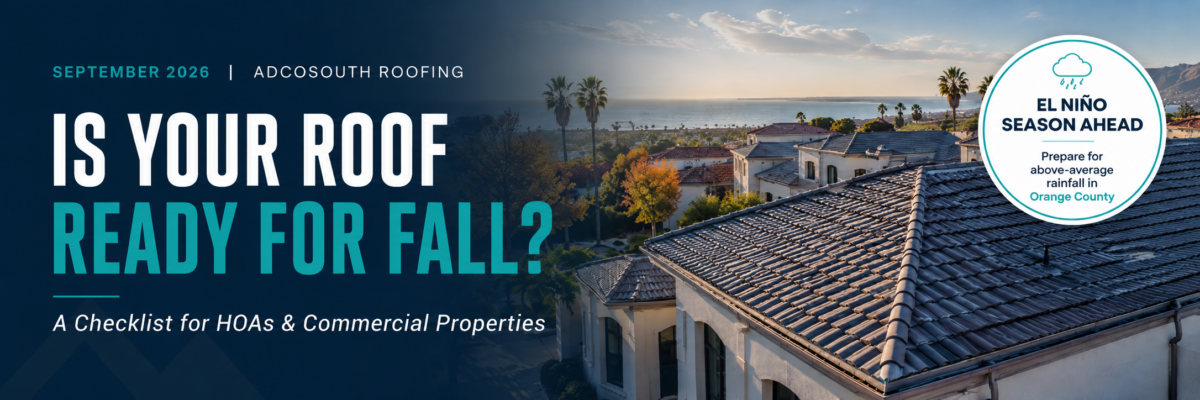
A Checklist for HOAs & Commercial Properties
Summer in Southern California is no picnic for your roof. Months of relentless UV exposure and heat leave their mark, even on roofs that look perfectly fine from the street. And this year, the stakes are even higher: with El Niño conditions forecasted for the coming season, Orange County is expected to see well above-average rainfall. That makes this fall the most important time in years to get your roof assessed before the storms roll in.
Whether you manage an HOA community, oversee a commercial property, or own a single-family home, the same rule applies: a little attention now can save you thousands in repairs later. Here’s what every property owner and HOA board member in Orange County should check before September is out.
Why Fall Is the Most Important Season for Your Roof
Most property managers and HOA boards think of spring as “inspection season,” but fall is actually more critical, especially here in Orange County. Here’s why:
Summer heat is brutal on roofing materials. Prolonged UV exposure dries out shingles, causes cracking in flat roof membranes, and degrades sealants around vents and flashing. By September, that damage has been accumulating for months.
El Niño is coming, and it is not something to take lightly. Forecasters are predicting an El Niño weather pattern this season, which historically brings significantly above-average rainfall to Southern California. We’re talking about the kind of rainy season that exposes every small crack, gap, and compromised seal your roof has been hiding all summer. If your roof has any vulnerabilities going into this fall, an El Niño winter will find them, usually at the worst possible time.
Santa Ana wind season is right behind fall. Orange County’s notorious Santa Ana winds typically arrive in October and November, bringing powerful gusts that can lift compromised shingles, tear at flashing, and drive debris across rooftops. A roof that made it through summer with small vulnerabilities may not survive its first Santa Ana event.
Your Fall Roof Checklist
You don’t need to climb up on your roof to do a first pass. Many of these checks can be done from the ground or from inside your attic. For HOAs, we recommend assigning this walkthrough to your property manager or scheduling a professional to assess multiple units at once. Here’s what to look for:
☑ EXTERIOR INSPECTION
☐ Shingles: Look for curling, cracking, buckling, or missing shingles, especially on south and west-facing slopes that absorb the most summer sun.
☐ Granule loss: Check your gutters and downspout splash areas for an accumulation of gritty, sand-like granules. This is a sign your shingles are aging out.
☐ Flashing: Inspect the metal flashing around chimneys, vents, skylights, and where the roof meets any walls. Lifted, rusted, or separated flashing is one of the leading causes of leaks.
☐ Flat roof membrane: If you have a flat or low-slope roof, look for bubbling, cracking, or ponding areas where water has been sitting.
☐ Gutters and downspouts: Clean out summer debris, check for sagging sections, and make sure downspouts are directing water well away from your foundation.
☑ ATTIC INSPECTION
☐ Water stains: Check the underside of your roof decking for dark spots, staining, or soft areas. These point to active or past leaks.
☐ Daylight: On a bright day, turn off the attic lights and look for any pinpoints of light coming through the roof. If light can get in, so can water.
☐ Ventilation: Make sure your attic vents are clear and unobstructed. Poor ventilation traps summer heat, accelerates shingle deterioration, and can cause moisture buildup in winter.
☐ Insulation: Check that insulation is dry and evenly distributed. Wet or compressed insulation is a sign of a moisture problem that needs immediate attention.
☑ AROUND THE PROPERTY
☐ Overhanging branches: Trim any tree limbs hanging over your roof before fall wind storms arrive. Branches scraping against shingles cause ongoing damage, and falling limbs in a storm can be catastrophic.
☐ Chimney and skylights: Check the caulking and sealant around these penetrations. Sealant shrinks and cracks in summer heat and needs to be refreshed before rain season.
☐ Fascia and soffits: Look for rot, peeling paint, or pest damage on the boards under your roof’s edge. These often go unnoticed until they become a major repair.
Signs You Should Call a Professional
Some things are safe to monitor on your own. Others are signals to pick up the phone. Call a licensed roofing contractor if you notice any of the following:
⚠️ Don’t wait on these warning signs:
- Water stains on your interior ceilings or walls
- Missing or cracked shingles in multiple areas
- Visible sagging on any part of the roof
- Flashing that is lifted, separated, or rusted through
- A roof that is 15+ years old and hasn’t been professionally inspected
- Any sign of mold or moss growth on the roof surface
These aren’t issues where a watchful eye is enough. Roofing problems almost always get worse and more expensive the longer they go unaddressed. A professional inspection can catch small issues before the first fall rain turns them into a ceiling collapse or a mold problem.
A Note for HOA Boards & Commercial Property Managers
Managing roofing across multiple units or a large commercial building adds a layer of complexity that individual homeowners don’t face. Fall is the right time to coordinate a property-wide roof inspection so issues are caught before rain season, rather than scrambling to respond to multiple unit complaints after the first storm hits.
As licensed HOA and commercial roofing contractors, we’re experienced in working within HOA timelines, board approval processes, and commercial property maintenance schedules. We can assess an entire community or property in one visit and provide documentation your board or management company can use for budgeting and planning.
What About Roof Warranties?
Before fall, it’s also a good time to pull out your roofing warranty documentation and review what’s covered. Many property owners and HOA boards are surprised to find that their warranty has conditions: regular inspections, approved contractors, and timely repair of minor damage. All of these must be met to keep coverage valid. Neglecting seasonal maintenance can actually void your warranty protections.
Not sure what your warranty covers? Check out our three-part series on Roof Warranties on the blog for a full breakdown.
The Bottom Line
Your roof took the full force of another Southern California summer. With El Niño on the way, this is not the fall to skip your inspection. Above-average rainfall means above-average risk for leaks, water intrusion, and damage that compounds fast. The time to get ahead of it is now, before the storms arrive and every roofing crew in the county is booked out for weeks.
At Adcosouth Roofing, we specialize in HOA and commercial roofing across Orange County, helping property managers, boards, and business owners protect their investments season after season. Whether you oversee a single building or an entire community, we’re here to help.