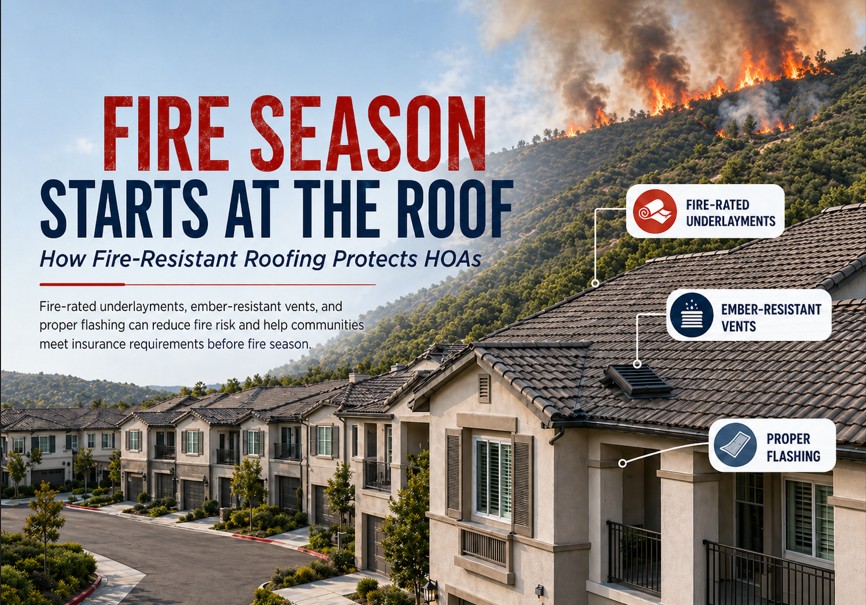
In California, wildfire preparedness starts at the top—literally. For homeowners associations, the roof is one of the most important lines of defense against wind-driven embers, radiant heat, and fast-moving fire conditions. As fire season approaches, May is the perfect time for HOA boards and property managers to review roofing systems and confirm they meet current fire-resistance standards.
For hillside communities and properties near wildland areas, fire-resistant roofing is more than a maintenance upgrade. It is a critical risk-reduction measure. A properly installed roofing system with fire-rated materials can help slow the spread of flames, reduce ember intrusion, and protect homes from avoidable damage.
Key components such as fire-rated underlayments, ember-resistant vents, and properly installed flashing all play an important role. Underlayments add an extra layer of protection beneath the roof surface. Ember-resistant vents help prevent burning debris from entering attic spaces. Flashing around roof edges, walls, chimneys, and openings helps seal vulnerable areas where heat and embers can cause problems.
HOAs should also consider how roofing condition may affect insurance coverage. Many carriers are taking a closer look at wildfire risk, especially in California communities. Staying proactive with inspections, documentation, and fire-resistant upgrades may help associations meet insurance requirements and avoid costly surprises later.
Before fire season intensifies, now is the time to schedule a professional roof inspection, identify vulnerable areas, and make necessary improvements. A stronger roof can help protect property, support community safety, and give residents greater peace of mind.